
Author: Dmytro Sholtun
-
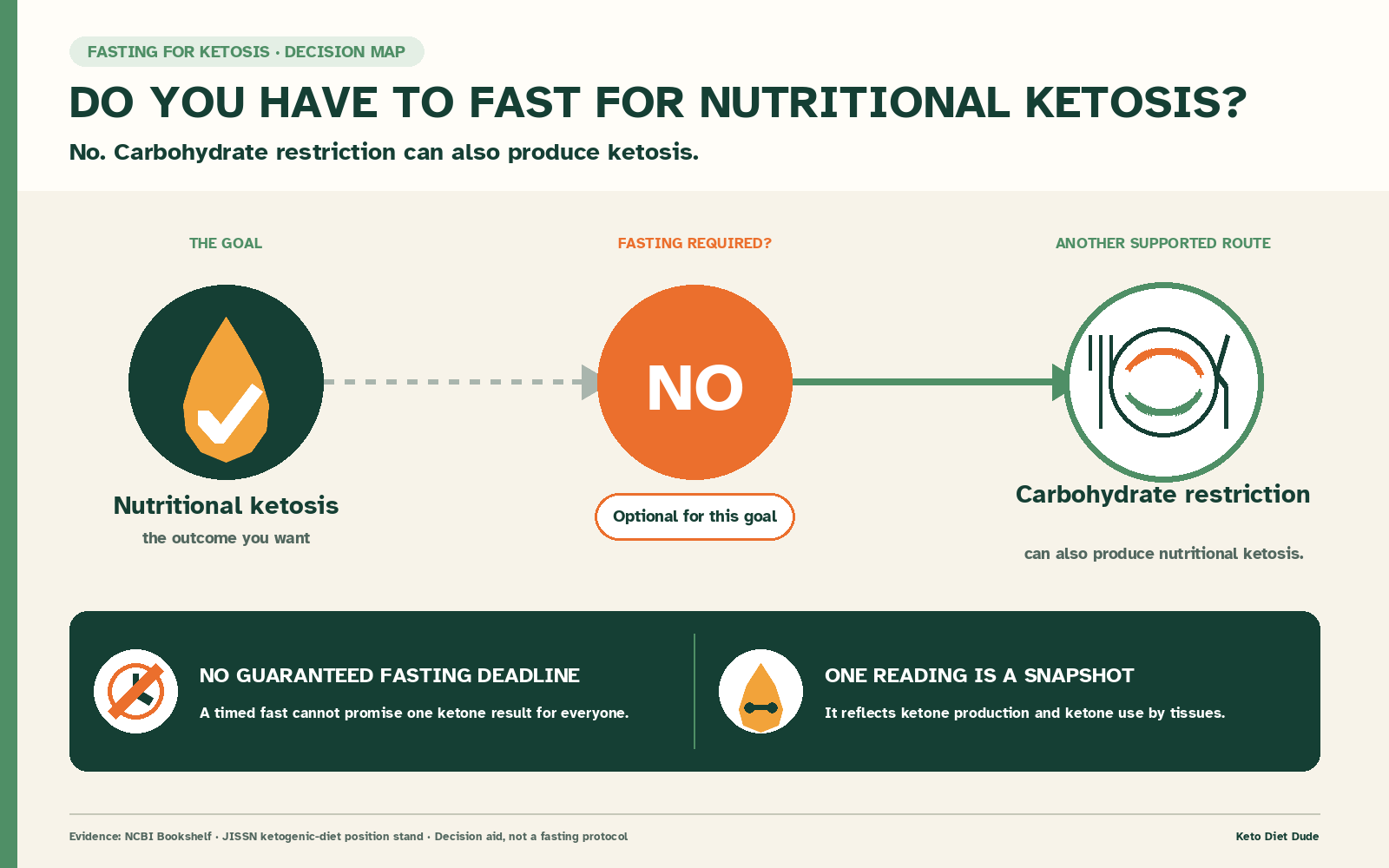
Fasting for Ketosis: Is It Necessary or Optional?
•
For readers considering fasting for ketosis, human evidence shows that fasting can support ketone production while carbohydrate restriction can induce nutritional ketosis without adding a fasting schedule.
-
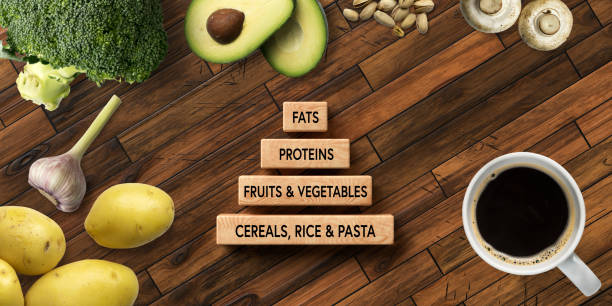
Keto Grocery List: What to Buy, What to Limit, and How to Stock Your Kitchen
•
A practical keto grocery list should focus on protein, unsweetened fats, low-carb produce, and label reading instead of hype purchases.
-

Keto vs. Paleo: Key Differences, Benefits, and Drawbacks
•
Keto and paleo overlap on whole-food preferences, but keto is defined by carbohydrate restriction while paleo is defined by food ancestry rules.
-

Can You Lose 10 Pounds in 3 Months on Keto?
•
Losing 10 pounds in 3 months on keto can be realistic for some people, but the outcome depends more on calorie intake, adherence, activity, and starting point than on keto alone.
-

Keto vs. Intermittent Fasting: Which Approach Fits Your Goal?
•
Keto changes what you eat, while intermittent fasting changes when you eat; some people combine them, but they solve different problems.
-
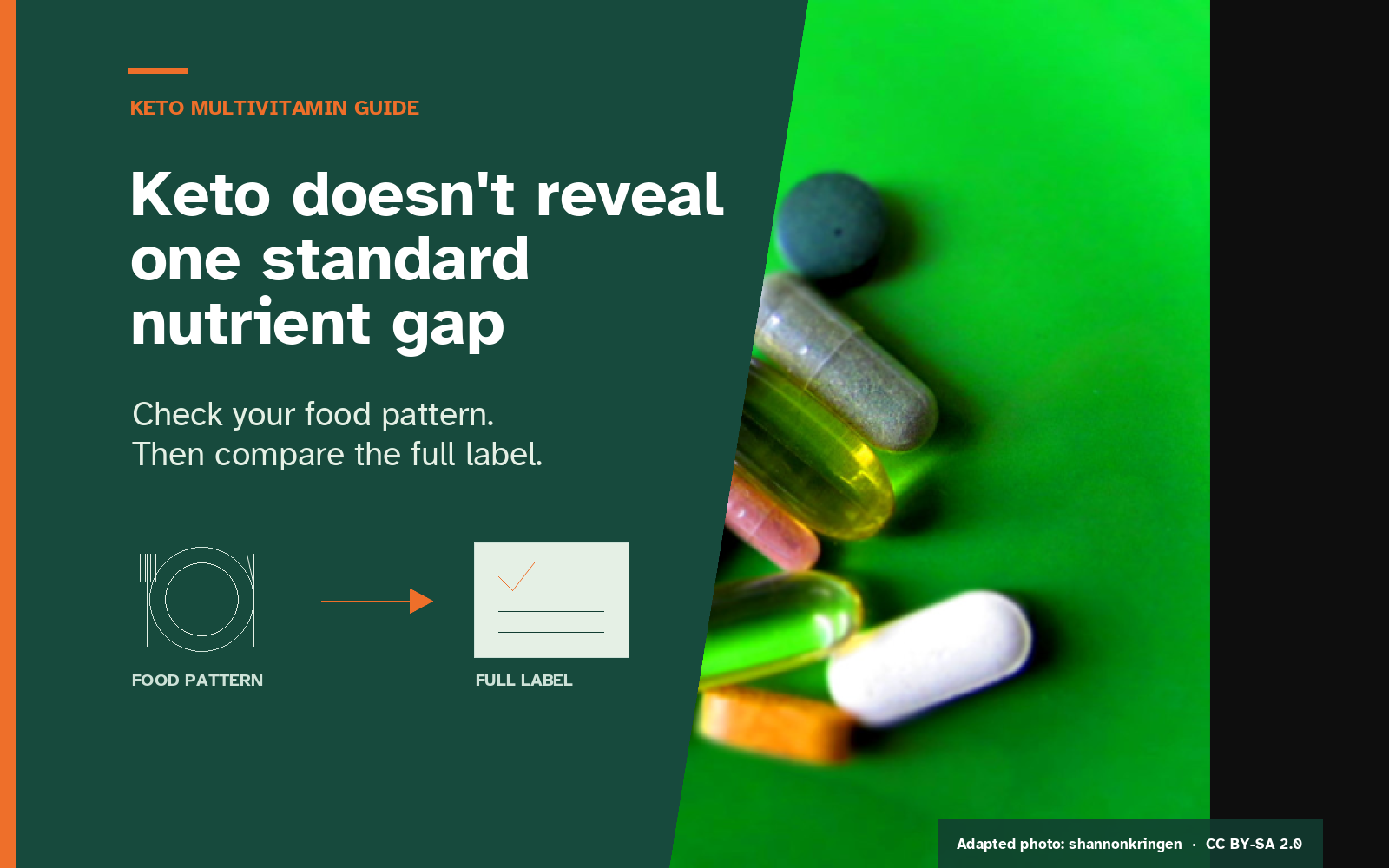
Best Multivitamin for Keto: Do You Actually Need One?
•
The best multivitamin for keto is not one universal product. Your usual food pattern, total nutrient sources, and personal safety context determine whether a formula deserves consideration.
-
Low Carb vs. Keto: What Actually Changes?
•
Low carb and keto are related, but keto is a narrower version that usually keeps carbs low enough to support ketosis.
-

Keto Fruits and Vegetables: Low-Carb Choices That Fit
•
Keto-friendly produce usually means prioritizing lower-carb vegetables and smaller portions of fruit rather than cutting plants out completely.
-

Is Cornstarch Keto-Friendly?
•
Cornstarch is not usually a keto-friendly thickener because it is mostly starch and can add carbs quickly even in small portions.
-
Lazy Keto: What It Is, What It Helps, and What It Misses
•
Lazy keto usually means tracking carbs without closely tracking calories, protein, or food quality, which can simplify the diet but also create blind spots.